
Introduction
Labrador Retrievers are among the most loyal, loving, and intelligent dog breeds — but raising one can be a handful if you don’t start training early. This Labrador puppy training guide is designed to take you from the chaos of biting and chewing to the calm of perfect obedience.
Whether you’re a first-time Lab owner or a seasoned dog lover, these steps will help you build a strong, respectful, and joyful bond with your puppy.
1. Understanding Your Labrador Puppy’s Behavior
Before diving into training, it’s essential to understand your Labrador’s nature. Labs are friendly, highly social, and full of energy. However, this enthusiasm can lead to biting, chewing, and jumping — especially during their teething phase (around 8 to 16 weeks old).
These behaviors aren’t signs of aggression; they’re natural puppy instincts. Knowing this helps you train with patience and empathy, rather than frustration. Always remember: a Labrador learns best through love and consistency.
2. Preparing for Training: Setting the Right Foundation
Training success begins with preparation.
Here’s how to create the perfect learning environment:
- Be consistent: Use the same words for commands like “Sit” or “Stay.”
- Set up a puppy zone: Create a safe space with toys, a crate, and puppy pads.
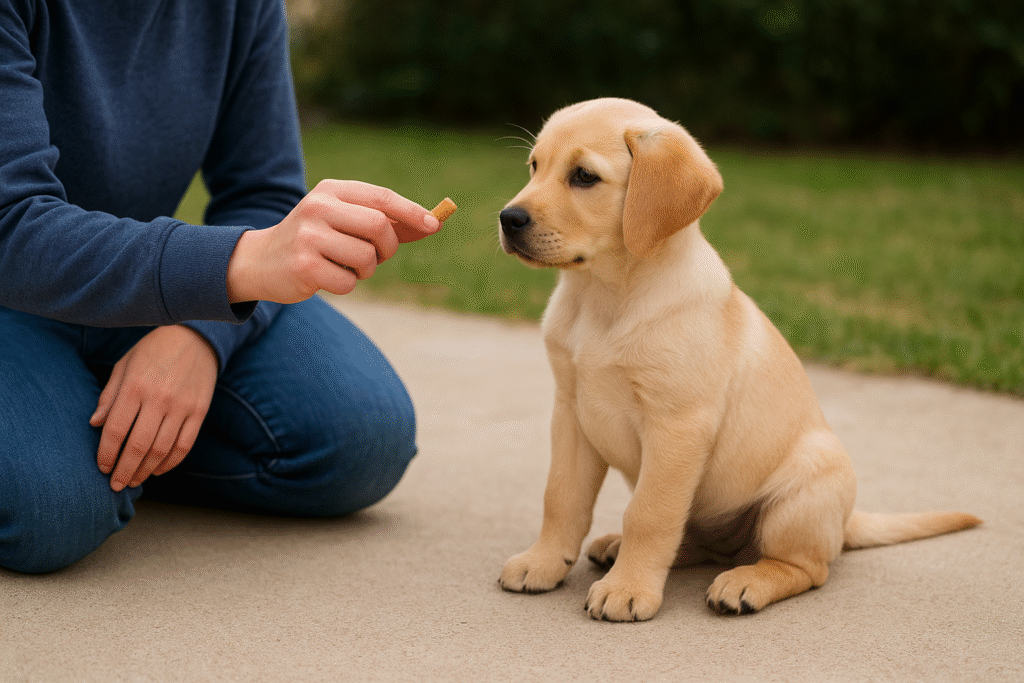
- Use positive reinforcement: Reward good behavior with treats and praise.
- Stick to a schedule: Regular feeding, playtime, and potty breaks help your Labrador understand structure.
A structured environment builds confidence and trust — the foundation of all effective training.
3. Step One: House Training and Potty Training
House training your Labrador is often the first big challenge. Puppies don’t automatically know where to relieve themselves, so consistency is key.
- Set a routine: Take your Lab out every 2–3 hours, especially after meals or naps.
- Choose a potty spot: Always use the same area so your puppy associates it with bathroom time.
- Praise immediately: Reward your Lab right after they finish in the correct spot.
- Crate training helps: It teaches bladder control and provides a safe resting place.
Avoid punishment for accidents — instead, calmly clean the area and reinforce the correct behavior next time.
4. Step Two: Teaching Basic Commands
Once your puppy is comfortable in their environment, begin with essential commands. Start small — Labs learn quickly but need repetition.
The top 5 beginner commands are:
- Sit: Hold a treat above your puppy’s nose and move it back; as they sit, say “Sit!” and reward them.
- Stay: Ask them to sit, then hold your hand up like a stop sign while saying “Stay.”
- Come: Call your puppy’s name followed by “Come!” and reward them when they respond.
- Down: Use a treat to lure them into lying down.
- Leave it: Teach this early to prevent chewing or eating unsafe items.
Keep sessions short (10–15 minutes) and fun. End on a positive note to encourage eagerness for the next lesson.
5. Step Three: Managing Biting, Chewing, and Jumping
Labrador puppies explore the world with their mouths. Here’s how to manage those little teeth!
- Redirect biting: Offer chew toys or frozen teething rings instead of your hands.
- Discourage jumping: Turn away and ignore your puppy until they’re calm, then reward gentle greetings.
- Socialize early: Introduce your Lab to new people, sounds, and pets. Social dogs are less likely to bite or jump from anxiety.
- Exercise regularly: A tired Lab is a well-behaved Lab. Boredom often leads to bad behavior.
Patience is key — biting and chewing usually reduce significantly after the teething stage.
6. Step Four: Leash Training and Outdoor Etiquette
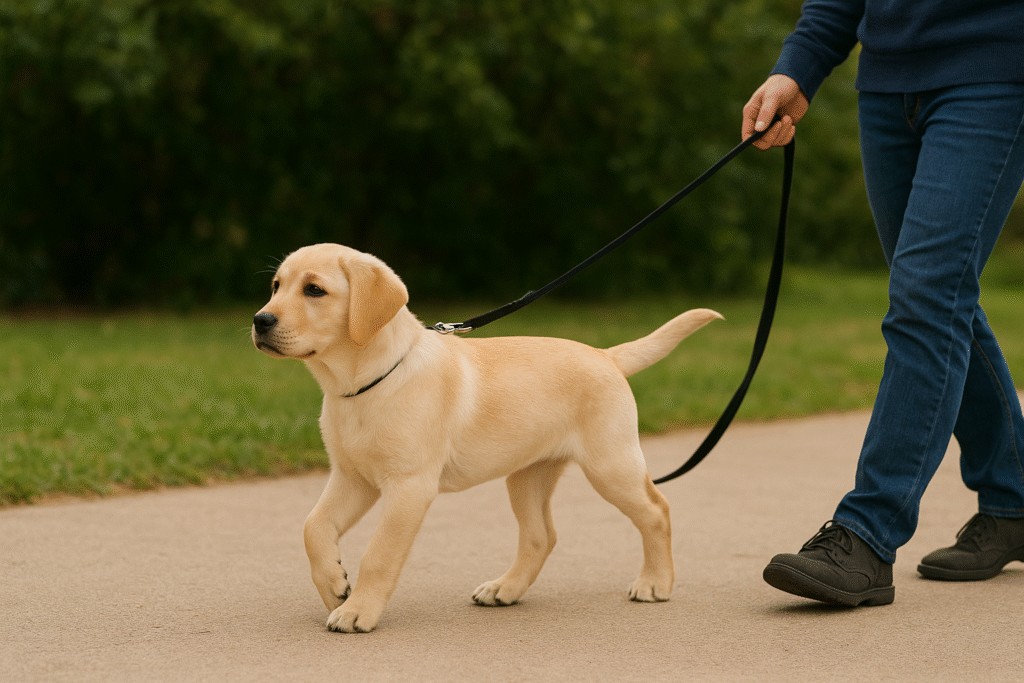
Taking your Labrador for walks should be enjoyable, not a tug-of-war! Start leash training indoors before going outside.
How to begin:
- Let your puppy wear the collar indoors to get used to it.
- Attach the leash and walk around the house.
- Use treats to reward calm walking beside you.
- If they pull, stop walking until they come back beside you.
Teach them to focus on you instead of distractions like squirrels or other dogs. Reinforce the “Come” and “Heel” commands during walks to ensure safety outdoors.
7. Step Five: Advanced Obedience and Good Manners
Once your Lab masters the basics, level up!
Advanced training keeps their mind active and reinforces discipline.
- Heel: Walk calmly beside you without pulling.
- Wait: Useful before crossing roads or entering the house.
- Leave it: Helps prevent them from grabbing harmful objects.
- Stay calm around guests: Practice controlled introductions.
You can also explore clicker training — a fun, reward-based system that uses a sound cue to mark correct behavior.
Gradually reduce treat rewards, but keep the praise going. Labs love to please!
8. Common Labrador Training Mistakes to Avoid
Even experienced owners make mistakes. Avoid these to ensure steady progress:
- Being inconsistent: If one day “Off” means no jumping, it should always mean that.
- Using punishment: Yelling or hitting will make your Lab fearful, not obedient.
- Skipping exercise: A bored Labrador is a mischievous one.
- Expecting instant results: Every puppy learns differently — progress takes time.
Celebrate small victories and keep sessions light-hearted.
9. Bonus: Keeping Training Fun and Engaging
Training doesn’t have to feel like work! Turn lessons into games to keep your Labrador interested.
Try:
- Fetch – reinforces the “Come” command.
- Hide and Seek – strengthens recall and focus.
- Tug-of-War – teaches impulse control.
- Obstacle courses – builds agility and confidence.
Mental stimulation is as important as physical exercise. Challenge your Lab with puzzle toys, scent games, and obedience drills to keep their brain sharp.
Why Choosing the Right Family Dog Mattershttps://iloveanimalworld.com/top-10-family-friendly-dog-breeds/
Conclusion
Training a Labrador puppy takes time, consistency, and love — but the rewards are lifelong. From mastering basic commands to walking obediently on a leash, every small milestone strengthens your bond.
Remember:
“Train with love, lead with patience — and your Labrador will reward you with loyalty for life.”
With these steps, your playful Lab will grow into a calm, obedient, and loving companion you’ll cherish forever.