
The Untold Heroism of Balto – The Brave Dog Who Saved Town from Disaster
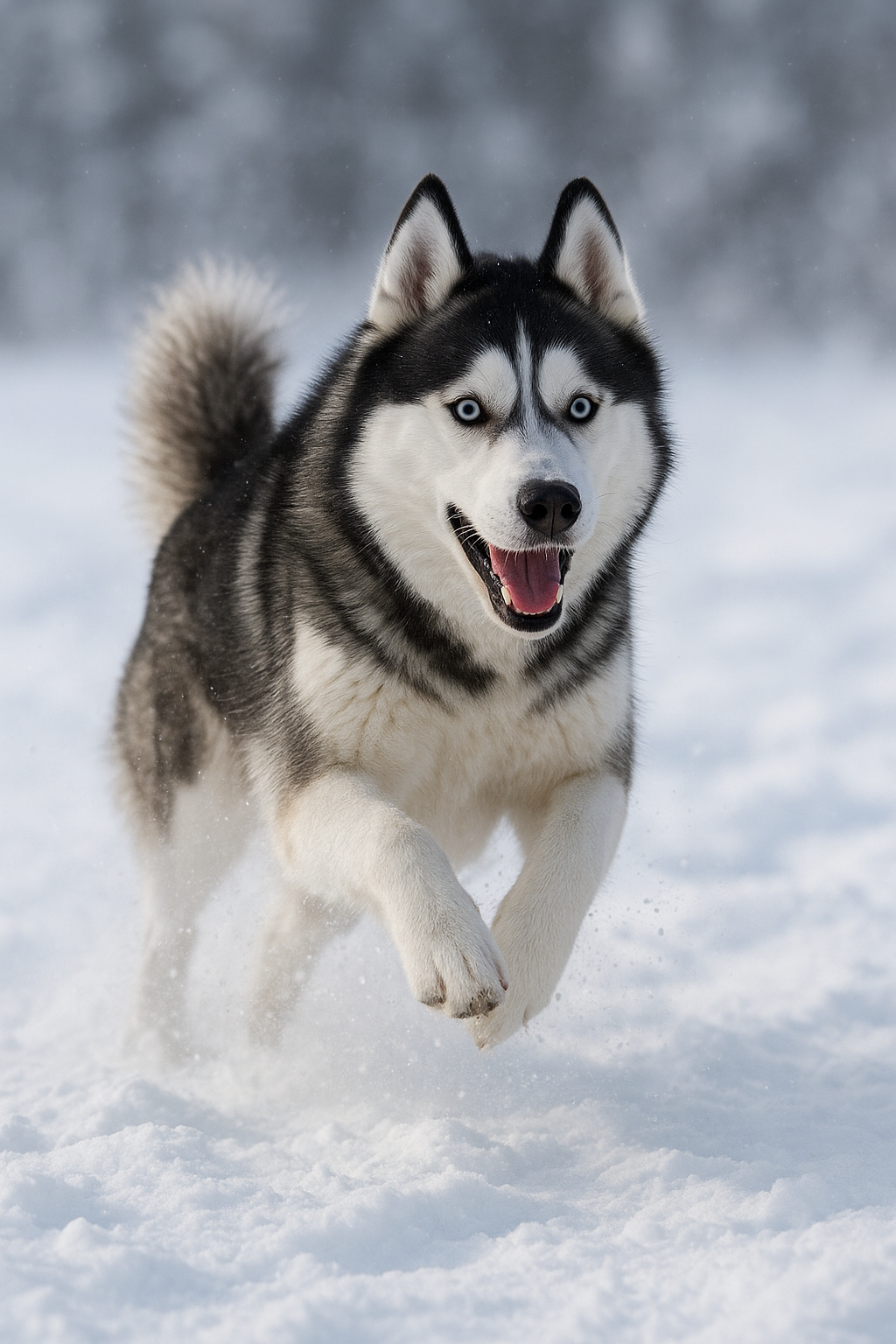
Discover the true story of Balto, the sled dog who braved freezing storms in 1925 to deliver life-saving medicine to Nome, Alaska. Learn how his courage turned him into a timeless symbol of heroism.
Introduction: A Hero Born in the Snow
In the heart of Alaska’s brutal winter of 1925, one dog’s courage changed history. Balto, a Siberian Husky with an indomitable spirit, led his sled team through blinding snowstorms to deliver medicine that would save an entire town. His heroic act during the Nome diphtheria outbreak remains one of the greatest tales of loyalty and bravery ever told. But behind the fame lies a story of endurance, teamwork, and sheer willpower against impossible odds.
The Deadly Threat: Nome’s Diphtheria Outbreak
In January 1925, a deadly diphtheria epidemic struck the remote town of Nome, Alaska. The disease threatened to wipe out hundreds, especially children. Nome was isolated by snow and ice, with temperatures plunging below -60°F. Airplanes were grounded, and ships couldn’t pass through the frozen seas. The only hope lay in transporting a vital antitoxin serum from Anchorage—over 600 miles away—through one of the harshest terrains on Earth.
The Serum Run: A Relay Through the Frozen Wilderness
To save Nome, 20 mushers and 150 sled dogs formed a relay known as the “Great Race of Mercy.” Battling howling winds, frostbite, and exhaustion, they passed the serum from one team to another. When the final stretch approached, Gunnar Kaasen and his lead dog, Balto, took the most perilous leg of the journey. Despite near-zero visibility and a fierce blizzard, Balto pressed forward with unshakable determination. Every step he took was a race against time—and death.
Balto’s Heroic Finish: The Dog Who Wouldn’t Give Up
On February 2, 1925, Balto and his team arrived in Nome, their faces covered in ice and snow. Against all odds, they had completed the last 55-mile leg of the relay, delivering the life-saving serum that stopped the epidemic in its tracks. Balto had guided his exhausted team through the blinding storm, navigating purely by instinct when even his musher could not see the trail. This extraordinary act of courage made Balto a symbol of endurance, loyalty, and leadership.
The Aftermath: Fame, Recognition, and Controversy
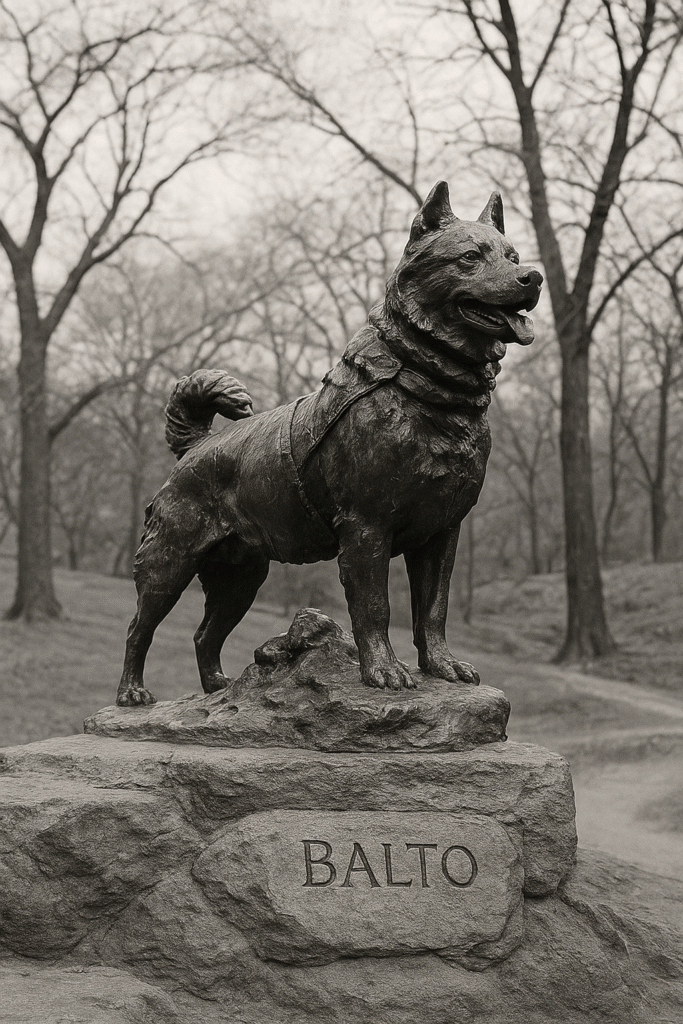
Balto’s bravery captured the world’s heart. He was celebrated across America, and a bronze statue was erected in Central Park, New York, honoring him and all the sled dogs of the 1925 serum run. However, controversy soon followed—many argued that Togo, another sled dog led by Leonhard Seppala, had covered a longer and more dangerous distance. Still, Balto remained the face of the mission, representing the courage and teamwork of every dog that ran to save Nome.
Balto’s Legacy: A Timeless Symbol of Bravery
Nearly a century later, Balto’s legacy continues to inspire people worldwide. His story has been immortalized in films, books, and museums, reminding us of the unbreakable bond between humans and animals. Balto teaches us that heroism doesn’t always wear a uniform—it sometimes has fur, paws, and a heart filled with courage. His journey embodies faith, endurance, and selfless devotion, values that remain timeless and deeply human.
How Dachshunds Took Over the Internet — And Our Hearts | Viral Dachshund Story & Facts
Conclusion
Balto’s heroism reminds us that even in the coldest, darkest moments, hope can shine through. His incredible journey not only saved lives but also showed the world the meaning of true bravery. Balto didn’t just deliver medicine—he delivered hope.